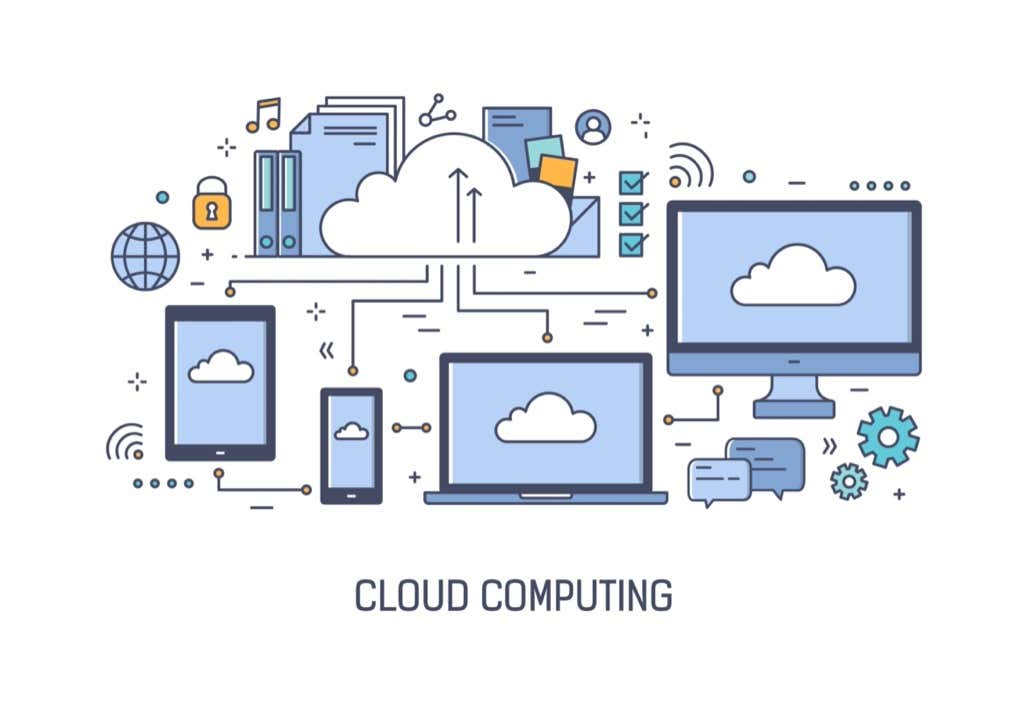
Cloud computing has already redefined the business landscape, and its transformative influence remains ongoing. The trends observed in 2023 signify a continuous surge in adoption and expansion as companies leverage the cloud to modernize their operations and enhance their IT capabilities.
This article delves into the six cloud computing trendsthat are shaping the market in 2024. These trends are poised to have a lasting impact beyond the current year, and the insights presented here are indispensable for maintaining competitiveness in the dynamic realm of cloud computing.
Understanding Cloud Computing?
The term "cloud computing" is used to describe the process of providing IT resources and services over the web. In this model, IT assets like servers, storage, databases, networking, software, and so on are pooled together and made available to users on demand. Users may access and exploit these resources remotely via the internet using cloud computing instead of depending on local infrastructure and physical devices.
The idea behind cloud computing is that customers may make use of computing resources and services without having to make significant financial or time commitments to acquire, install, and maintain their server infrastructure. Since the cloud service provider owns and administers the underlying infrastructure, customers can concentrate their attention where it belongs: on running their programs and storing their data.
Public cloud, private cloud, hybrid cloud, and multi-cloud are only a few of the deployment types for cloud computing. To meet their unique needs, businesses may choose the most appropriate model from among those that provide varying degrees of control, flexibility, and safety.
As a whole, cloud computing has improved the digital environment by making it more flexible, scalable, and cost-effective for both organizations and people to get access to and control over computer resources.
Service Models
Cloud computing provides different service models to cater to diverse needs:
- Infrastructure as a Service (IaaS)- All hardware components, including servers, storage, and networking, may be virtualized in this architecture. Customers may maintain their software stacks and have more say over the underlying infrastructure.
- Platform as a Service (PaaS)- Applications may be built, tested, and released with the help of PaaS. Cloud computing allows users to concentrate on application development rather than maintaining their servers, data storage, and network infrastructure.
- Software as a Service (SaaS)- Users of SaaS pay a monthly or yearly fee to have unlimited access to a collection of programs over the cloud. The cloud service provider is responsible for the upkeep of the complete system, including all software, hardware, and data.
Deployment Models
- Public Cloud- Accessible to anybody with an internet connection, "public cloud" services come from external suppliers. The pooling of available assets allows for greater efficiency and lower overall costs for all customers.
- Private Cloud- With a private cloud, just one company uses the underlying resources. Hosting options include in-house servers and external service providers. Private clouds provide for greater levels of customization, security, and control.
- Hybrid Cloud- Hybrid cloud mixes public and private cloud infrastructures to provide the advantages of both to businesses. It allows for workloads to be divided up in a variety of ways, depending on considerations like performance, security, and compliance.
- Multi-Cloud- Utilizing several cloud providers' offerings helps reduce risk, improve availability, and make the most of each provider's unique set of skills.
Key Benefits Of Cloud Computing
Cloud computing's rapid growth can be attributed to its diverse array of advantages, which are driving its adoption by businesses and individuals.
According to Statista, 71% of people use cloud storage services to store their photos.
One of the most compelling reasons is its capacity to economize both time and resources typically needed for the establishment of a comprehensive physical IT infrastructure. Let's delve into the manifold benefits that the cloud offers:

Cost Reduction
Maintaining traditional IT systems demands substantial capital investments. Cloud computing mitigates this burden by eliminating the necessity to purchase expensive infrastructure. Cloud providers operate on a pay-as-you-go model, ensuring that businesses only incur expenses for the services they utilize, resulting in significant cost savings.
In a Thalessurvey, Approximately 60% of the world's corporate data is stored in the cloud.
Scalability
Cloud technology empowers organizations to rapidly expand their user base, whether from a handful to thousands, within a concise timeframe. It provides the flexibility to adjust storage capacities according to the organization's evolving needs, thereby enhancing adaptability.
Flexibility And Collaboration
Cloud-based data accessibility via the Internet enables employees to work remotely from any location at any time. This flexibility allows for the establishment of virtual offices anywhere and facilitates seamless collaboration among teams across various geographical areas, including third-party vendors, who can access duplicate files.
Business Continuity
The cloud securely stores and safeguards data, ensuring its preservation during system outages or crises. This reliability makes it easier to resume operations promptly once systems are restored.
Competitive Advantage
By handling various aspects of business operations, such as IT infrastructure maintenance, software licensing, and data management personnel training, the cloud provides a competitive edge. This advantage stems from the minimal time and resources required, setting businesses apart from their competitors.
Challenges For Cloud Computing
Various challenges arise from the emergence of cloud computing technologies in different aspects of data and information management. If you decide to implement cloud infrastructure services, you may encounter the following cloud computing challenges and risks:
Privacy And Data Security
The foremost concerns within cloud computing models revolve around privacy and data security. Safeguarding the confidentiality and integrity of user or business data stored in the cloud is of utmost importance. These security and privacy concerns can be addressed through the implementation of encryption, security hardware, and software solutions.
Issues such as identity theft, data breaches, malware infections, and other security threats in the cloud can erode user trust in your applications, resulting in significant revenue losses and damage to your reputation. Additionally, the swift transfer of large volumes of data inherent in small business cloud computing can expose vulnerabilities, leading to data leaks.
In an ISC2survey, 64% of respondents highlighted data loss and leakage as a primary cloud security concern, with 62% citing data privacy and confidentiality. Additionally, other notable problems included credential exposure and regulatory compliance.
Cost Management
One of the advantages of cloud computing is the ability to scale processing capacity without substantial investments in new hardware. Businesses can leverage pay-as-you-go strategies offered by public cloud providers, ultimately reducing the overall cost of resource utilization.
However, accurately defining and forecasting resource quantities and associated costs can occasionally prove challenging due to the on-demand and scalable nature of cloud computing services.
Multi-Cloud Environments
Modern companies no longer rely on a single cloud provider but often employ multiple providers, with nearly 84% of organizations adopting hybrid cloud strategies. This diversification presents challenges in terms of management, as it can be complex for IT teams to handle the differences between various cloud infrastructure service providers.
Performance Challenges
Performance is a critical consideration when evaluating cloud-based solutions. Subpar cloud performance can lead to user dissatisfaction and harm business operations. For example, even a slight increase in latency when loading an application or website can result in a significant drop in user engagement.
Ineffective load balancing, which hampers the optimal distribution of incoming traffic among servers, can contribute to this latency. Ensuring fault tolerance and the ability for operations to continue even when components fail also poses challenges.
Portability
Simplifying the migration of applications from one cloud provider to another is essential but challenging within the realm of cloud computing. Avoiding vendor lock-in becomes a paramount concern. Unfortunately, achieving portability is difficult due to the use of distinct standard languages by different cloud providers for their systems.
Cloud Computing Market Right Now
The present cloud computing market is split up into sub-markets that specialize in certain services, deployment methods, company sizes, business focuses, and geographical locations.
Based On Service
Infrastructure as a Service (IaaS), Platform as a Service (PaaS), and Software as a Service (SaaS) are the three main subsegments of this sector. By a wide margin, software as a service (SaaS) is the most lucrative sector of the cloud computing business.
Based On The Deployment Mode
Market players may choose from the public cloud, private cloud, or a combination of the two. When it comes to cloud computing, the public cloud is by far the most popular option, followed by private clouds and hybrid clouds.
The market is broken down into small and medium-sized businesses (SMEs) and multinational corporations (MNCs). The cloud computing industry is dominated by significant corporations, followed by small and medium-sized enterprises.
Based On Industry Vertical
BFSI, healthcare, retail, IT and telecom, manufacturing, government, and others are the market's subsegments. Businesses in the financial services industry (BFSI), followed by those in retail, IT and telecom, manufacturing, government, and others, make up the most significant section of the cloud computing market.
Based On Region
The global market is broken down into four regions: North America, Europe, Asia-Pacific, and the RoW. The market for cloud computing is divided into four major regions: North America, Europe, Asia Pacific, and the rest of the world.
10 Emerging Cloud Computing Trends 2023
The cloud remains an indispensable asset across various industries as businesses increasingly depend on on-demand IT solutions, ranging from accounting software to comprehensive IaaS, PaaS, and SaaS offerings. The following statistics provide insight into the current state of the cloud market:
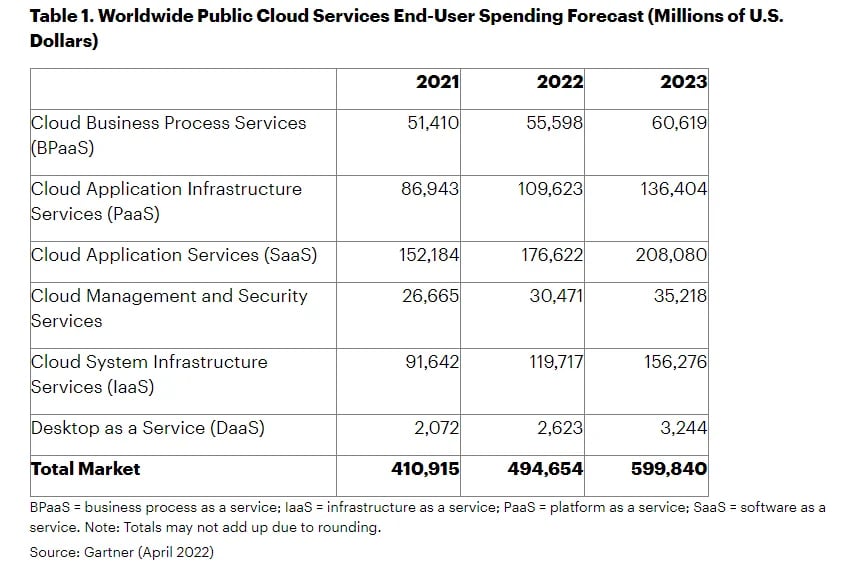
- Enterprises leverage the cloud to handle approximately 94% of all business workloads, with 75% of these workloads operating as part of Software-as-a-Service (SaaS).
- The global cloud computing market is projected to reach $623.3 billion by the conclusion of 2023, and this figure is anticipated to surpass $800 billion by 2025.
- End-user expenditures on cloud services are estimated to reach approximately $599 billion by the end of 2023, compared to around $332.3 billion in 2022.
- More than 92% of enterprises have adopted a multi-cloud strategy.
- Approximately one-third of a typical company's IT budget is allocated to cloud services.
- North America accounts for the majority, comprising 61%, of the global cloud computing market.
- Over 48% of companies intend to migrate the majority of their applications to the cloud by the end of 2023.
- By 2025, businesses are anticipated to deploy 95% of all new workloads on cloud-native platforms.
These statistics unmistakably demonstrate that the cloud will continue to assume a pivotal role in the field of IT in the upcoming years.
Now, let's delve into the cloud computing trends anticipated for 2023.
Edge Computing
Edge computing represents an approach aimed at optimizing cloud network systems, a prominent trend in cloud computing. Within edge computing, data undergoes processing and analysis at the network's periphery, in proximity to the data source. This approach accelerates data processing, increasing its speed and volume, thereby delivering real-time optimized results.
The benefits of edge computing include enhanced data transmission speed, heightened efficiency, improved privacy, and heightened security, all of which empower organizations to streamline and automate their operations, resulting in improved performance and output.
The advent of 5G has further propelled the prominence of edge computing, positioning it as a pivotal element in future cloud strategies.
Artificial Intelligence And Machine Learning Platforms
Artificial intelligence (AI) and machine learning (ML) technologies stand out as significant trends within cloud computing for 2023. However, many businesses lack the resources and financial means to construct their AI and ML infrastructure.
Furthermore, the data collection process and algorithm training necessitate substantial computational power and storage space. In such instances, opting for cloud-based AI and ML resources proves to be a more cost-effective solution.
Leading organizations are actively exploring innovative ways to integrate AI into their operations, automating processes to enhance output and meet evolving business requirements.
According to research conducted by CISCO, 83% of executives regard AI as a strategic priority for scaling their enterprises. Additionally, cloud service providers leverage AI for managing extensive storage networks offered to their clients, overseeing power and cooling systems, developing cybersecurity solutions to bolster data security, and more.
Disaster Recovery And Backup
While digital transformation accelerates business growth, unforeseen crises such as data outages, system failures, or cyberattacks can significantly disrupt operations. It is commonplace for enterprises to suffer substantial data losses due to server malfunctions.
In response, data recovery and backup have become indispensable aspects of cloud computing. These mechanisms enable organizations to restore critical systems before incurring losses. Cloud-based disaster recovery solutions automatically maintain data records and store them on external cloud servers, safeguarding against data loss.
Multi And Hybrid Cloud Solutions
Multi-cloud and hybrid cloud solutions are rapidly gaining traction as a notable trend in cloud computing. Research indicates that by 2023, multi-cloud adoption is expected to increase by 67%, while hybrid-cloud adoption will surge by 72%. Businesses have recognized that effective data management necessitates the integration of various cloud strategies rather than relying solely on a single cloud platform.
Multi-cloud and hybrid-cloud strategies optimize business operations by combining multiple public and private cloud platforms. This approach proves especially advantageous for industries such as insurance and banking, where data insights drive business enhancements.
Avoiding dependency on a single platform mitigates challenges that may arise when a cloud service provider discontinues support for an application. Consequently, opting for hybrid or multi-model approaches offers enhanced flexibility and operational ease, facilitating seamless application portability without disrupting critical processes.
Cloud Security And Resilience
Cloud security and resilience have assumed paramount importance in light of the convenience and efficiency offered by cloud migration, which also introduces critical security risks that organizations cannot afford to ignore. Evolving regulations governing data storage and usage have further underscored the need for robust security measures to avoid penalties.
Hence, cloud security and resilience in the face of threats such as credential theft, data breaches, and cyberattacks constitute top cloud computing trends for 2023. Cloud service providers allocate substantial resources to fortify security features, safeguard client data, and address cybersecurity challenges.
Companies are increasingly exploring cost-effective cloud services equipped with stringent security protocols to ensure data protection. This trend is driving the adoption of AI and predictive tools for identifying potential cyber threats and an increasing reliance on managed "security-as-a-service" providers.
Cloud Gaming
Cloud technology, which has catalyzed the growth of entertainment streaming services like Netflix and Spotify, is now making inroads into the gaming industry. Industry giants such as Microsoft, Sony, Nvidia, and Amazon are stepping up to offer cloud-based streaming services for video games.
According to Newzoo, the cloud gaming market has the potential to be valued at over $6 billion by the year 2024.
Kubernetes & Docker
Kubernetes and Docker are container orchestration tools that are emerging as popular trends in cloud computing. Kubernetes, an open-source platform, automates operational tasks such as deploying, scaling, and monitoring containerized applications. Docker, on the other hand, facilitates the packaging of applications designed to run on multiple platforms into containers.
These technologies are poised to shape the future of cloud architecture. Many companies are opting for Kubernetes and Docker to manage their cloud deployments, enabling highly scalable and efficient large-scale deployments.
Serverless Computing
Serverless computing presents an architecture that eliminates common barriers associated with traditional IT infrastructure, including high maintenance costs and latency in deployment and scaling. It offers computing resources as a service, allowing organizations to pay only for the resources they use.
With serverless computing, organizations no longer need to install and maintain physical data processing servers, relying extensively on third-party providers for these tasks. This approach accelerates infrastructure-related tasks such as scheduling, provisioning, and scaling, enabling developers to focus on core tasks.
The popularity of serverless computing is surging due to its numerous advantages, including seamless operations, reduced liability, freedom from infrastructure management, improved offline experiences, and cost-effectiveness.
DevSecOps
While cloud computing streamlines tasks and accelerates operations, it introduces significant security risks that cannot be disregarded. These risks encompass hacking, network eavesdropping, cloud-service abuse, virtual vulnerabilities, side-channel attacks, and more. Data security is a paramount concern that often deters businesses from adopting cloud solutions.
DevSecOps represents a key trend in cloud computing that addresses this formidable challenge. DevSecOps, an abbreviation for development, security, and operations, offers infrastructure security at every stage of the software development lifecycle, starting from its inception.
It emphasizes automating essential security tasks by embedding controls throughout the workflow. DevSecOps assumes a central role in the future growth of cloud computing, as it ensures consistent security throughout the entire lifecycle.
Low-Code And No-Code Cloud Services
Low-code and no-code solutions are gaining widespread popularity among users seeking tools and platforms that enable them to create data-centric solutions and applications without the need for extensive coding expertise. These solutions encompass platforms for building websites, web applications, and various other digital solutions, including AI-assisted applications.
Furthermore, these low-code and no-code services are cloud-based, eliminating the need for substantial infrastructure. Examples of such services include Airtable, Zoho, Figma, and others, empowering users to perform tasks such as website design and spreadsheet automation that previously necessitated coding knowledge.
Future Of Cloud Computing From 2025-2030
Since the world of technology is changing at a dizzying rate, it's necessary to look forward and predict what will happen with cloud computing. Let's have a look at some of the forecasts for the future of cloud computing.
The Growth Of Multi-cloud
Companies now have a more flexible option for integrating various cloud providers thanks to the advent of hybrid clouds. Consequently, customers will be able to get the most suitable cloud services for any need, which is one of the most talked-about forecasts for the near future of cloud computing.
The IDCprojects that global cloud infrastructure spending will reach $1.35 trillion by 2027.
The Rise Of Edge Computing
Due in large part to the increased data processing capability of edge devices, cloud migration has begun to occur at the edge. Access to the service edge has grown more critical for enterprises as the need for real-time data analytics grows. The promise of improved customization and decreased latencies in processing data makes edge computing crucial in this forthcoming trend.
The Introduction Of AI To Machine Learning
Automation and self-maintenance of systems are two of the most attractive aspects of applying AI to the field of machine learning. Both qualities are critical to the smooth operation of enterprises, which is why AI will play a significant role in the development of cloud computing in the future.
FAQs - Cloud Computing Trends
What Is Cloud Computing Trends?
Other technologies like quantum computing, cloud gaming, augmented and virtual reality (VR/AR), and the Internet of Things (IoT) will emerge in the years following the widespread adoption of AI, ML, Kubernetes, and docker in 2023.
Will AI Replace Cloud Computing?
Although AI isn't going to replace cloud architects anytime soon, it might make parts of their work easier and more efficient via automation. Automating cloud resource provisioning and setup is one use of AI. Keep an eye out for any slowdowns or security breaches in cloud infrastructure.
Is AI Better Than The Cloud?
High-throughput jobs are completed more quickly by AI-powered machines. AI has altered how businesses approach cloud infrastructure. The way people make use of clouds has changed because of AI. By combining cloud computing and AI, businesses may better compete with established players in specialized markets.
Conclusion
Looking forward to 2023, cloud computing will maintain its role as a catalyst for reshaping the business environment, unlocking fresh possibilities, and presenting avenues for digital transformation.
By wholeheartedly embracing the top cloud computing trends discussed in this article and capitalizing on our expertise in custom software development, our clients can cultivate resilient and innovative digital solutions.
Irrespective of the path your company follows in its cloud journey, be it adopting hybrid cloud architectures, harnessing serverless computing, leveraging edge computing, integrating artificial intelligence, implementing multi-cloud strategies, or containerizing with Kubernetes, our team stands ready to assist.
The incorporation of these trends will not only empower our clients to remain competitive in the digital landscape of 2023 but also ensure scalability, flexibility, and cost optimization.