Selecting The Right Cloud Provider For Your Kenyan Business
Kenya's digital transformation is accelerating rapidly, with businesses across all sectors recognizing cloud computing as essential for growth, efficiency, and competitiveness. Yet choosing the right cloud provider remains one of the most critical decisions facing Kenyan organizations today.
The stakes are particularly high in Kenya due to unique regulatory requirements, infrastructure considerations, and market dynamics that don't exist elsewhere.
The Kenya Data Protection Act mandates that at least one serving copy of personal data must be stored in a data centre located within Kenya, fundamentally changing how businesses approach cloud selection.
Key Takeaways
- Compliance is non-negotiable: Ensure your chosen provider can meet the Kenya Data Protection Act requirements for local data storage.
- Evaluate both local and international options: Each offers distinct advantages depending on your specific needs and scale.
- Prioritize total cost of ownership: Look beyond basic pricing to include data transfer, support, and compliance costs.
- Test performance thoroughly: Latency and reliability can vary significantly between providers in the Kenyan market.
- Plan for scalability: Choose providers that can grow with your business and adapt to changing regulatory requirements.
- Consider hybrid solutions: Many successful Kenyan businesses use combinations of local and international providers.
- Assess support quality: Local support capabilities can make a crucial difference in problem resolution and ongoing success.
Understanding Your Cloud Requirements In Kenya
Before evaluating providers, you must clearly define your organization's specific needs within the Kenyan business environment. This foundational step determines which providers are even viable options for your situation.
- Categorizing your data according to sensitivity and regulatory requirements: Personal data of Kenyan citizens falls under strict data protection regulations, requiring local storage solutions. Business-critical applications may need low-latency access, favoring providers with local infrastructure. Non-sensitive workloads might benefit from the cost advantages and advanced features of international providers.
- Consider your technical requirements carefully: Bandwidth limitations and internet reliability in certain regions of Kenya can significantly impact cloud performance. If your team operates from areas with inconsistent connectivity, prioritizing providers with robust offline capabilities or edge computing solutions becomes essential.
- Your industry sector also influences provider selection: Financial services face additional regulatory scrutiny, healthcare organizations must consider patient data protection, and government entities have specific security clearance requirements. Each sector brings unique compliance obligations that narrow your provider options.
- Budget constraints require honest assessment: While cloud computing can reduce overall IT costs, initial migration expenses and ongoing operational costs vary dramatically between providers. Factor in not just compute and storage costs, but also data transfer fees, support charges, and potential compliance audit expenses.
- Evaluate your internal technical expertise: Some providers offer managed services that can compensate for limited in-house cloud skills, while others require substantial technical knowledge to implement effectively. Your team's capabilities should align with your chosen provider's service model and support structure.
Top Cloud Providers In Kenya
Cloud computing has grown rapidly in Kenya, making it easier for businesses to scale, store data securely, and access modern digital solutions without heavy infrastructure costs. Several global and local providers are leading this transformation. Here are the top cloud service providers in Kenya:
1. Amazon Web Services (AWS)

What is AWS? | Amazon Web Services
AWS is one of the most widely used cloud platforms globally, and many Kenyan companies are adopting it for its reliability and wide range of services. From data storage and computing power to advanced AI tools, AWS offers flexible solutions for startups, SMEs, and enterprises. Its pay-as-you-go model is especially attractive to businesses that want scalability without huge upfront costs.
2. Microsoft Azure

Microsoft Azure is another global giant offering cloud services in Kenya. Known for its seamless integration with Microsoft tools like Office 365 and Dynamics, it’s a popular choice for organizations that already use Microsoft products. Azure provides robust solutions for hosting applications, managing data, and running analytics, making it ideal for both private businesses and government institutions.
3. Google Cloud
Google Cloudbrings powerful data and AI-driven services to Kenyan businesses. Companies benefit from its strong analytics, machine learning, and cloud storage capabilities. Google Cloud is particularly appealing to startups and developers who want to build applications faster while leveraging Google’s infrastructure for speed and innovation.
4. Safaricom Cloud

As Kenya’s largest telecom provider, Safaricomhas built its own cloud services tailored for local businesses. Safaricom Cloud provides reliable storage, backup, and disaster recovery solutions with the advantage of local customer support. It’s designed to be affordable and practical, making it especially valuable for SMEs looking to digitize operations without depending entirely on foreign providers.
5. Angani
Angani is one of Kenya’s first homegrown cloud service providers. It focuses on offering cloud infrastructure that’s affordable and accessible to local businesses. With data centers in the country, Angani provides faster access and compliance with data residency requirements, which is a growing concern for businesses handling sensitive information.
6. Liquid Intelligent Technologies

Liquid Intelligent Technologies is a major player in Africa’s tech and connectivity space. In Kenya, it offers cloud and data center services that combine storage, hosting, and cybersecurity solutions. With its strong fiber network across the continent, Liquid ensures reliable connectivity for businesses using its cloud services.
7. Node Africa

Node Africa is a Kenyan-based cloud company known for its focus on innovation and flexibility. It provides services such as cloud hosting, backup, and disaster recovery. Node Africa stands out for helping small and medium businesses transition smoothly into the cloud, offering localized support and solutions tailored for the Kenyan market.
Critical Factors To Evaluate When Choosing A Cloud Provider
1. Performance And Reliability
- Evaluate data center locations – local presence in Nairobi or Mombasa reduces latency and boosts compliance.
- Assess SLAs covering uptime guarantees and incident response times.
- Consider network redundancy and how the provider connects to Nairobi’s fiber optic infrastructure.
2. Security And Compliance
- Check for GDPR-like certifications and alignment with Kenya’s Data Protection Act (DPA).
- Ensure data residency policies support storing Kenyan data within local borders.
- Review security features like encryption standards, identity access management, and threat detection.
3. Cost Structure And Local Payment Options
- Understand pricing models: fixed-price tiers often suit SMEs; pay-as-you-go fits flexible enterprise demands.
- Confirm billing in Kenyan Shillings and compatibility with mobile payments (M-Pesa).
- Identify hidden costs such as egress fees or support charges.
4. Scalability And Flexibility
- Look for providers that offer auto-scaling, flexible resource provisioning, and hybrid cloud options.
- Verify availability of advanced services if required (e.g., AI, IoT platforms).
5. Support And Customer Service
- Prioritize vendors with dedicated local support teams operating 24/7.
- Consider SLAs on support response and escalation procedures.
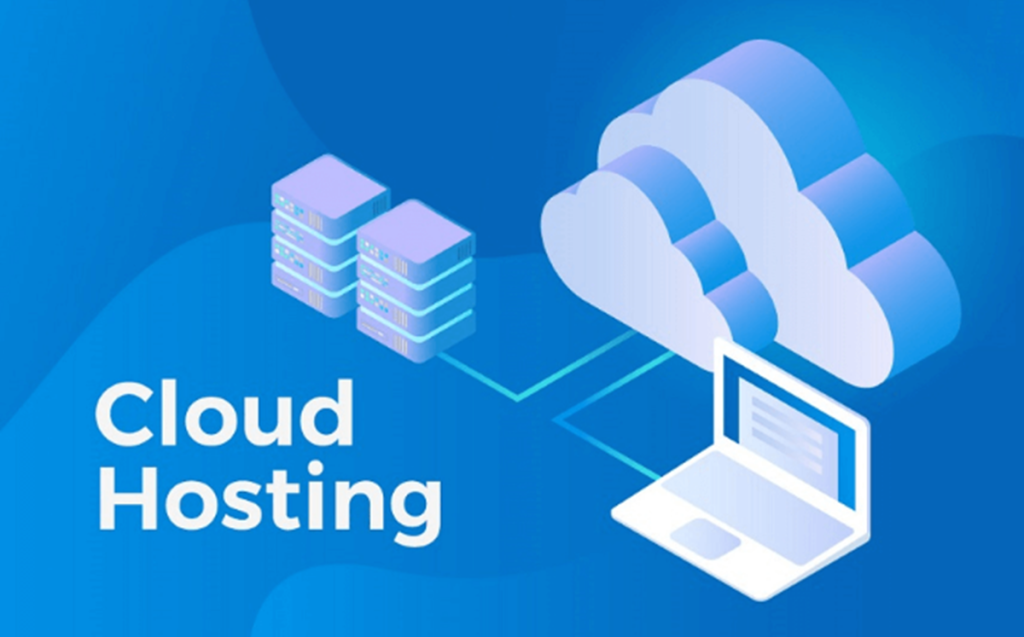
Choosing A Cloud Provider
1. Assess Your Needs And Cloud Readiness
The initial and most crucial step is to perform a thorough internal audit. You need to identify precisely what you want to achieve with the cloud. This includes understanding your current IT infrastructure, the applications you'll be migrating, and the sensitivity of your data.
In Kenya, this is particularly important for compliance. For example, the Data Protection Act of 2019 regulates how personal data is handled and may require you to keep certain data within the country's borders.
Therefore, you must assess whether your data is personal or sensitive and if it's subject to these regulations. This assessment also helps you define your technical requirements, such as the amount of storage, compute power, and network bandwidth you'll need.
2. Shortlist Providers With A Local Focus
When creating your shortlist, it's essential to look at both global hyperscale providers and local Kenyan companies. While major players like Microsoft Azure and Google Cloud have a significant presence in Africa, local providers like Konza Cloud or companies with local data centers like Africa Data Centres may offer advantages such as lower latency, better local support, and more straightforward compliance with local data residency laws. Your evaluation should be based on four key pillars:
- Compliance: Do they adhere to the Data Protection Act, 2019, and other relevant Kenyan regulations? This is a non-negotiable requirement.
- Performance: A provider with a local data center in Nairobi or another major city will likely offer lower latency for Kenyan users, which is critical for real-time applications.
- Cost: Compare pricing models carefully. Some local providers may offer more predictable, fixed-cost billing in KES, which can be simpler than the variable, USD-based pricing of international providers.
- Support: Evaluate the level of technical support provided. Can you get support in real-time from a team in Kenya? This can be a huge benefit when dealing with urgent issues.
3. Request Proposals And Conduct A Proof-of-Concept
Once you have a shortlist, engage with each provider to request a formal proposal. This document should clearly outline the services they will provide, their pricing structure, and how they plan to meet your specific needs.
A crucial part of this step is to implement a proof-of-concept (POC) project. A POC is a small, pilot implementation where you migrate a non-critical application or a small dataset to the provider's platform.
This gives you a firsthand look at the provider's performance, user experience, and the effectiveness of their support. It’s an invaluable step that can reveal real-world challenges not apparent in a sales presentation.
4. Evaluate Stability And Security
Before committing, you need to conduct due diligence on the providers. This involves assessing their technical and financial stability. A financially stable provider with a strong market presence in Kenya is more likely to be a long-term partner.
From a technical standpoint, verify their security certifications (such as ISO 27001 or PCI DSS) and inquire about their disaster recovery and business continuity plans.
In Kenya, it's especially important to confirm that they have local data backup and recovery solutions in place to comply with data sovereignty regulations.
5. Finalize Contracts And Plan Migration
The contract is your safety net. Ensure the final agreement includes detailed Service Level Agreements (SLAs) that specify uptime guarantees, performance metrics, and penalties for failure to meet these standards. The contract should also contain a clear and detailed migration plan.
This plan should outline the timeline, responsibilities of both parties, and a well-defined rollback strategy in case of issues. A solid support framework must also be established, detailing how you will escalate and resolve issues, as well as the response times you can expect.
6. Begin Migration With Pilot Projects
Do not attempt to migrate all your applications at once. Instead, start with pilot projects. These are small, controlled migrations of less critical systems.
This phased approach allows your team to get comfortable with the new environment, identify and resolve unforeseen issues, and fine-tune the migration process.
For example, you might start with a file server or a non-essential website. Use the feedback from these pilots to refine your strategy before moving on to more critical business applications.
7. Optimize And Manage Your Cloud Environment
Cloud adoption is an ongoing process, not a one-time project. After migration, you must regularly optimize your cloud usage and costs. Use the provider's tools to monitor resource consumption and identify areas where you can reduce spending.
This might involve resizing virtual machines, archiving old data, or taking advantage of reserved instances. Continuous monitoring and optimization ensure that you are not only getting the best performance but also the most value from your cloud investment in the long run.
Understanding Internet Infrastructure For Optimal Cloud Performance

Internet connectivity quality has a direct impact on cloud application performance in Kenya.
Key ISPs For Cloud Connectivity:
- Safaricom:Leading telecom with extensive fiber and 5G networks. Reliable but may face congestion in some areas.
- Faiba (Jamii Telecom):Offers some of the highest average speeds and lowest latency, ideal for cloud workloads.
- Telkom Kenya:Competitive speeds and growing fiber footprint.
- Zuku:Known for low-latency connections suitable for real-time applications.
Redundancy across multiple ISPs and network routes is advisable for mission-critical cloud services.
Selecting Cloud Providers For Different Business Sizes And Needs
For SMEs:
- Favor providers with transparent pricing and simplified service packages.
- Local providers such as Angani or Safaricom offer easier compliance and better local support.
- Focus on core services (basic computing and storage) first before complex platforms.
For Enterprises:
- Adopt hybrid or multi-cloud approaches combining local providers for compliance and global platforms for innovation.
- Utilize advanced services (data warehousing, AI) offered by AWS, Azure, or Google.
- Negotiate enterprise-level SLAs and support agreements.
Disaster Recovery And Backup Solutions In Kenya's Cloud Environment
Cloud providers with integrated backup and disaster recovery (DR) capabilities improve business resilience.
- Look for automated backups, geographic redundancy, encryption, and real-time data replication.
- Local providers often have DR sites within Kenya, which is essential for compliance and fast recovery.
- Global providers offer sophisticated DR but may struggle with compliance for sensitive Kenyan data.
Popular Kenyan providers for DR include Angani and Safaricom; enterprises may use hybrid strategies.
Navigating Kenya’s Cloud Policy And Regulatory Landscape
The Kenya Cloud Policy 2024 reinforces a “cloud-first” approach with emphasis on sovereignty.
- Government-related data must use government cloud services or compliant local providers.
- Private firms must comply with data residency and privacy clauses aligned with Kenya’s Data Protection Act.
- Providers must be transparent about data handling and cross-border flows.
Related: Best Cloud Computing Services For Small Businesses
Frequently Asked Questions
Which Cloud Provider Is Most Popular In Kenya?
AWS currently leads the global cloud market and has strong adoption in Kenya, particularly among larger enterprises and tech companies. Safaricom's cloud services are widely used by local businesses due to their compliance advantages and local support. The "most popular" depends on business size and requirements, with smaller companies often preferring local solutions while larger organizations frequently choose international providers.
Do I Need To Store Data Locally To Comply With Kenyan Law?
Yes, the Kenya Data Protection Act requires at least one serving copy of personal data to be stored within Kenya. This applies to any business processing personal data of Kenyan citizens. However, you can still use international cloud providers if they offer local data center options or partnerships with local providers that ensure compliance.
How Much Does Cloud Hosting Cost In Kenya?
Costs vary significantly based on your requirements and chosen provider. Local providers often offer competitive pricing for basic services, typically starting from KES 5,000-15,000 monthly for small business packages. International providers may have higher base costs but offer more advanced features. Calculate the total cost of ownership, including data transfer, support, and compliance expenses for accurate comparisons.
Should I Choose AWS, Azure, Or Google Cloud For My Kenyan Business?
The choice depends on your specific needs rather than provider popularity. AWS offers the broadest service portfolio and strong local partnerships. Azure integrates well with Microsoft products commonly used in Kenyan businesses. Google Cloud provides advanced AI/ML capabilities. Evaluate based on your technical requirements, compliance needs, and team expertise rather than brand recognition.
What About Data Backup And Disaster Recovery?
Backup and disaster recovery planning is crucial and should influence your provider selection. Local providers like Safaricom offer geographically distributed data centers within Kenya for redundancy. International providers may require careful planning to ensure backup data also complies with local storage requirements while providing adequate protection against various failure scenarios.
How Do I Ensure My Cloud Provider Meets Security Standards?
Review security certifications such as ISO 27001, SOC 2, and other relevant standards. For international providers, verify they understand and can meet the Kenya Data Protection Act requirements. Request security audits, penetration testing reports, and compliance documentation. Local providers should demonstrate physical security measures and staff vetting procedures.
Can I Use Multiple Cloud Providers Simultaneously?
Yes, many Kenyan businesses successfully implement multi-cloud strategies. You might use local providers for compliance-sensitive data and international providers for advanced analytics or development environments. However, multi-cloud approaches increase complexity and management overhead, so ensure your team has sufficient expertise to manage multiple platforms effectively.
What Happens If I Need To Switch Cloud Providers?
Data portability varies between providers, so understand export capabilities and potential lock-in risks before committing. Ensure contracts include clear termination procedures and data retrieval rights. Some providers offer migration assistance, while others may charge substantial fees for data transfer. Plan exit strategies during the selection process rather than after problems arise.
How Important Is Local Customer Support?
Local support can be crucial, especially for businesses without extensive cloud expertise. Timezone alignment, language preferences, and understanding of local business practices significantly impact support effectiveness. However, balance this against the technical depth and resource availability that international providers' global support networks offer.
Are There Government Incentives For Using Local Cloud Providers?
While specific incentives change over time, the government generally supports local digital infrastructure development. Some tenders and government contracts may prefer or require local hosting solutions. Additionally, using local providers can contribute to the broader goal of digital sovereignty and local economic development, which may have indirect benefits for your business relationships and reputation.
Conclusion
Success lies in taking a systematic approach that prioritizes your non-negotiable requirements while remaining flexible on preferences. Whether you choose local providers for their compliance advantages and support quality, international providers for their advanced capabilities and scale, or a hybrid approach that combines both, ensure your decision aligns with your long-term business strategy.
The cloud landscape in Kenya continues evolving rapidly, with new local options emerging and international providers expanding their local presence. Oracle Corporation is set to establish its Cloud Data Centre in Nairobi, reinforcing Kenya as a top investment destination in Africa, indicating continued growth in local infrastructure options.
If this article was helpful or insightful, please consider sharing it to assist more Kenyan businesses in making informed cloud provider choices.
You Might Like: How Cloud Services Are Changing Businesses In Nigeria